
The danger isn't that AI will make everyone illiterate. The danger is that it will create a two-tier system
After years of delivering GCSEs and A-Levels, I noticed something that couldn't be ignored. Students who were good at English consistently performed better across subjects. The correlation between literacy, subject knowledge, demonstration, and oracy was striking these skills invariably marked top achievers.
Mark Martin
10/25/20256 min read
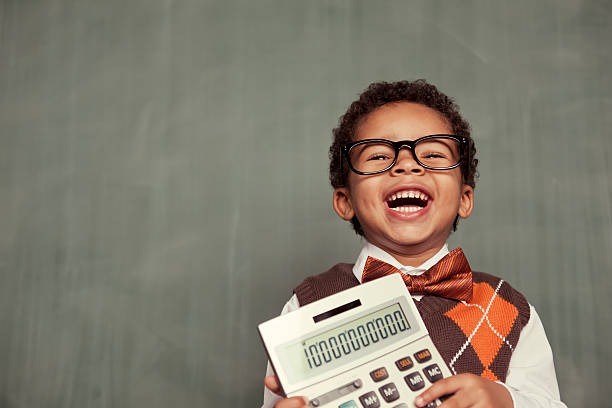
As I've studied emerging trends in education—edtech, new pedagogies, and their effects on learning I've come to realise we're standing at a familiar crossroads. Recently, a colleague and I were discussing AI adoption in schools and what the end result might be. He pointed me to the era of the 1970s. At first, I wasn't sure where he was going with this, but then it clicked! The current panic about AI mirrors almost exactly the calculator debate of that era. But this time, the stakes might be even higher.
Lets go back in time, when affordable calculators entered classrooms in the mid-1970s, the response was fierce. A survey by Mathematics Teacher magazine, highlighted in Science News in 1975, found that 72% of teachers and mathematicians opposed giving calculators to seventh-graders. The fears were existential students' computational abilities would be ruined, they'd become too reliant on machines, they wouldn't learn to estimate or understand their errors.
In the US, some states banned calculators from standardised tests whilst others mandated their use, sparking what one researcher memorably described as "a battle of wills between educators who saw these machines as either handy little classroom-elves, or devilish little desk-goblins."
One professor captured the anxiety perfectly:
"What do they do when the battery runs out?" 😂 Sound familiar? "What do you they do when they don't have the premium version or wifi?
Interestingly, we're seeing similar divergent approaches today. Claude (Anthropic's AI) has provided some universities with an academic version to their Sonnet 4.5 model. Institution are actively encouraging students to use AI in their coursework.
But they've set clear conditions on how it should be used. Students are assessed not just on their final work, but on the quality of their data sources (including AI-generated content), proper citation and referencing of AI use, and the strength of their analysis using appropriate theory.
Some lecturers have designed rubrics that rewards students who use AI well whilst citing it properly, demonstrate strong analytical thinking, and show they understand the material deeply enough to critique and build upon AI outputs. Poor or uncited AI use, weak analysis, or over-reliance on AI without critical engagement results in lower marks.
Here's what's remarkable in this present moment of history. We worried calculators would destroy numeracy. In some ways, they did change what "basic" maths looks like. But mental arithmetic and number sense didn't become obsolete, they became more valuable.
The calculator commodified basic computation. Anyone can now get the correct answer to 347 × 82.
But the person who can estimate "roughly 28,000" in their head and immediately spot that an answer of 2,847 is wrong? That person has real power.
The calculator didn't eliminate the need for numeracy, it raised the bar for what constitutes valuable numeracy. Basic skills became table stakes, sophisticated numerical reasoning became the differentiator.
We're now watching the same pattern unfold with literacy and AI. The fears echo across five decades:
"Students will become dependent on the technology, they won't learn fundamental skills, they won't understand their mistakes, and critical thinking will suffer."
And just like calculators, AI is already in students' pockets. Snapchat's "My AI" sits alongside their chats. No school policy will change that reality. So, as educators and parents, we can't bury our heads in the sand and let algorithms, LLM models, and corporate greed sort things out.
But here's my prediction, drawn from the calculator precedent:
AI won't make literacy obsolete. It will make elite literacy more valuable than ever.
AI will likely commodify basic literacy in the way calculators commodified arithmetic. Grammatically correct sentences, standard essay structures, routine summaries and reports, and basic content generation. But this creates a paradox, when everyone has access to competent AI-generated writing, the ability to rise above that baseline becomes the key differentiator.
Elite literacy skills will become premium. Critical evaluation means knowing when AI output is shallow, wrong, or biased. Nuanced expression captures complexity that AI flattens into generalities. Original synthesis makes connections AI can't derive from its training data. Rhetorical sophistication understands audience, tone, and persuasion beyond templates. Quality detection distinguishes excellent writing from merely adequate writing. Just as we now value people who can do mental maths and use calculators effectively, we'll value those who can think critically and use AI tools strategically.
Here's the ultimate litmus test for the AI age:
Can you stand up and articulate what you've written or generated, clearly and concisely to an audience?
Public speaking, alongside literacy, becomes the key skill of the future. This approach forces students into critical thinking and analysis. You have to truly understand your content to convey it effectively. If you've become over-reliant on getting a polished AI response without engaging with the material, you won't know what you're talking about when you have to present it. Also, if you all use AI with the same models, you’re going to get the same or very similar responses. This is a teacher’s nightmare when marking scripts that are all AI-generated with the same structure, narrative, and content.
The student who are creative, understand the complexity of literacy and can take an idea, whether developed with AI assistance or not and communicate it with clarity, confidence, and genuine understanding will stand apart.
Oracy isn't just about speaking; it's proof of comprehension.
This is where it gets uncomfortable. The calculator precedent suggests technology doesn't level the playing field, it often widens the gap between those with strong foundational skills and those without.
Students who develop their literacy skills, who read widely and out aloud, write regularly, think critically will be able to use AI as a powerful amplifier. They'll spot its errors, refine its outputs, and push beyond its limitations. Students who rely on AI without developing underlying literacy skills will be stuck at the level of "mediocre but grammatically correct" which is exactly where everyone else will be. The same student who struggles to evaluate whether a calculation makes sense will struggle to evaluate whether an AI-generated paragraph is accurate, relevant, or well-argued.
The calculator debate eventually resolved not through policy but through changing practice. Teachers learnt to focus on problem-solving, estimation, and conceptual understanding rather than rote computation.
The question shifted from "should we allow calculators?" to "how do we teach maths in a world where calculators exist?"
We need the same shift now. The question isn't whether to "allow" AI (students already have it), but how we teach literacy in a world where AI exists. That means doubling down on deep reading and textual analysis, original argumentation and synthesis, critical evaluation of sources (including AI-generated ones), sophisticated writing that goes beyond competent prose, and oracy. The ability to articulate complex ideas.
This aligns with the current government's stated ambition to "put confident speaking skills at the heart of what we teach our children" and the 2024 Oracy Commission's call for oracy to be recognised as the "fourth R" alongside reading, writing, and arithmetic. These were always important. My experience teaching GCSEs and A-Levels confirmed this literacy was the foundation of achievement across subjects. But AI makes these skills not just important but essential for differentiation.
The danger isn't that AI will make everyone illiterate. The danger is that it will create a two-tier system: those who use AI to enhance already-strong literacy, and those who use AI as a substitute for literacy they never developed.
The calculator didn't destroy maths education. But it did mean that students who never developed number sense who couldn't estimate, couldn't spot errors were at a serious disadvantage even with a calculator in hand. The same will be true for literacy. AI won't destroy it. But students who never develop genuine reading, writing, and thinking skills will find themselves unable to effectively use the very tools meant to help them.
The rise of AI in education and students using generated content reminds me of the early days of Wikipedia, when students would copy entire passages, including the sponsored links like "Where to buy my next sports car" and paste them directly into their work.
The student's mentality was simple, "I've got the perfect research to satisfy the homework question."
But here's the uncomfortable truth, students' mentality often isn't about critical thinking or genuine learning. It's about ensuring they don't get a detention or in trouble for not doing the homework. Looking deeper at the matter, there's an issue where people will use AI to avoid "getting into trouble" rather than to learn or develop their skills. This is the real challenge educators face. It's not just about whether AI helps or hinders learning in theory, it's about understanding the practical psychology of students who are primarily motivated by compliance rather than curiosity. Until we address this underlying dynamic, we'll continue to see tools misused, whether they're calculators, Wikipedia, or AI.
Finally!
Here's the optimistic case.....
Just as calculators eventually pushed maths education to focus on more sophisticated skills, AI could push literacy education in productive directions. When basic writing competence is automated, we're freed to focus on what really matters, original thinking, critical analysis, persuasive argument, creative synthesis. The students who can do these things will be more sought-after than ever.
The irony of the calculator age was that it made mental arithmetic more valuable, not less. The irony of the AI age may be that it makes elite literacy more valuable, not less.
The question is:
are we preparing students for that reality?
What patterns are you noticing in your own teaching or learning context? I'm continuing to study how these emerging trends play out in practice, the conversation is far from over.
"My Teaching Routine" book takes you on a journey. It's not a linear book or one with a fixed narrative sequence which requires you to start at the beginning. The book takes you through different phases of the classroom and gets you to think about each stage and process."